Handheld 3D Scanner Technology: Unlocking Fast, Accurate, and Portable Scanning for Modern Projects

In today’s fast-moving world of design, engineering, and creativity, flexibility matters just as much as precision. Professionals and hobbyists alike are looking for tools that are not only accurate but also easy to use in different environments. This is where a handheld 3d scanner stands out as a powerful solution.
Unlike traditional scanning systems that require fixed setups, handheld devices allow users to capture objects anywhere—whether in a workshop, office, factory, or even outdoors. This level of portability, combined with modern accuracy, is transforming how people approach digital modeling and 3D workflows in 2026.
What Is a Handheld 3D Scanner?
A handheld 3D scanner is a portable device that captures the shape and surface details of an object by moving around it. Using advanced technologies such as structured light or laser scanning, the device collects thousands of data points across the object’s surface.
These data points are then processed into a digital 3D model, often called a mesh. This model can be edited, refined, and exported for use in CAD software, 3D printing, or analysis tools.
Compared to traditional measurement tools, a handheld 3d scanner captures complete geometry rather than just individual dimensions. This makes it far more efficient for complex shapes and detailed objects.
Why Portability Changes Everything
One of the biggest advantages of handheld scanners is their ability to work in real-world environments. Traditional scanners often require controlled conditions, such as stable lighting and fixed positioning.
With a handheld device, users can bring the scanner directly to the object instead of moving the object to the scanner. This is especially useful for:
- Large or heavy items that are difficult to move
- On-site projects in construction or manufacturing
- Outdoor scanning tasks
- Time-sensitive workflows where speed matters
Portability allows users to capture data quickly and efficiently, no matter where the project takes place.
Speed and Efficiency in Modern Workflows
Time is a critical factor in modern projects. Whether developing a product or creating a prototype, faster workflows mean better productivity and quicker results.
A handheld 3d scanner significantly reduces the time required to create digital models. Instead of manually measuring and modeling an object, users can scan it in minutes and begin working on the design immediately.
This leads to a streamlined workflow:
Scan → Process → Edit → Use
By reducing manual effort, handheld scanners allow creators to focus on improving designs rather than building them from scratch.
Accuracy You Can Rely On
Portability does not mean sacrificing precision. Modern handheld scanners are designed to deliver high levels of accuracy, capturing fine details and complex surfaces with ease.
This is particularly important for applications such as:
- Engineering and product design
- Reverse engineering
- Quality control and inspection
- 3D printing and prototyping
A reliable 3d scanner ensures that the digital model closely matches the real object, reducing errors and improving the final outcome.
See also: Advanced scanning tech: revolutionizing security and healthcare
Applications Across Industries
Handheld 3D scanning technology is used in a wide range of industries and creative fields:
- Product Design and Prototyping: Designers can scan prototypes, refine digital models, and quickly produce updated versions using 3D printing.
- Manufacturing and Quality Control: Engineers can scan parts to check for accuracy and ensure they meet design specifications.
- Architecture and Construction: Professionals can capture on-site data for planning, documentation, and analysis.
- Art and Creative Work: Artists can digitize sculptures or handmade objects for replication or modification.
- Education: Students can learn design and engineering concepts by scanning real-world objects and working with digital models.
These applications highlight the versatility and importance of handheld scanning technology in modern workflows.
Revopoint: Portable Scanning Made Practical
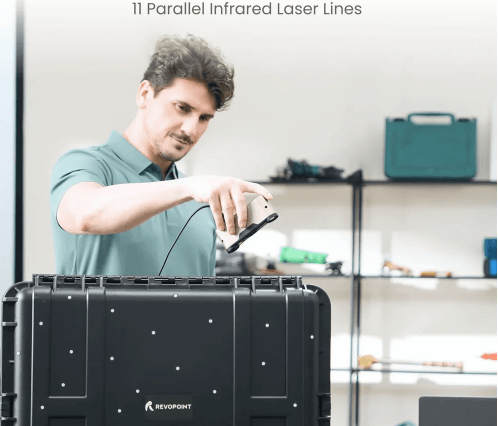
Revopoint are leading the way in making handheld 3D scanning accessible and effective. At Revopoint, users can explore a range of devices designed for both beginners and professionals.
Revopoint scanners are known for combining portability with precision. Their devices are lightweight, easy to handle, and capable of capturing high-resolution scans in different environments.
Key features include:
- High-detail scanning for accurate digital models
- Real-time tracking for smooth and consistent results
- Compact, portable designs for on-site use
- Compatibility with CAD software and 3D printing systems
These features make Revopoint scanners a practical choice for anyone looking to integrate handheld scanning into their workflow.
Tips for Better Scanning Results
To get the most out of a handheld 3D scanner, a few simple practices can make a big difference:
- Ensure proper lighting to improve scan quality
- Move the scanner steadily around the object
- Capture multiple angles for complete coverage
- Use software tools to clean and refine the final model
These steps help ensure that your scans are accurate and ready for use in design or production.
Final Thoughts
Handheld 3D scanning technology has changed the way people approach digital design and real-world data capture. A handheld 3d scanner offers the perfect balance of speed, accuracy, and portability, making it an essential tool for modern projects.
Title Page Separator Site title
In today’s fast-moving world of design, engineering, and creativity, flexibility matters just as much as precision. Professionals and
Whether you are an engineer, designer, artist, or hobbyist, a reliable 3d scanner allows you to capture objects quickly and turn them into precise digital models. With advanced solutions from companies like Revopoint, 3D scanning is now more accessible and practical than ever, helping users bring ideas to life with confidence and efficiency.