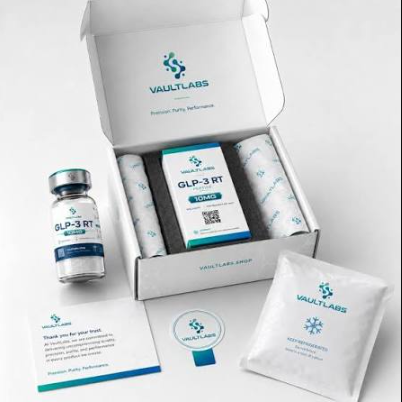
From Delivery to Data: A Lab Checklist for Working With Retatrutide

Retatrutide has become one of the most requested compounds in metabolic research, and many UK labs are working with it for the first time. Most problems with peptide research do not come from the experiment itself. They come from the steps before it: where the compound came from, how it was stored, how it was prepared and how well it was recorded. This checklist covers each stage, from the moment a vial arrives to the point it goes into an experiment.
1. Before you order: check the paperwork
Ask for the certificate of analysis before you buy, not after. A useful certificate should:
- Come from an independent lab, such as Janoshik, rather than the supplier itself.
- Match the batch number printed on the vial you will receive.
- Show identity (that the compound is retatrutide), purity (ideally 98% or higher) and the measured peptide content in milligrams.
- Be verifiable on the testing lab’s own website using a key or task number.
If a supplier cannot provide this, treat any results from their material with caution.
See also: How Custody Decisions Impact Family Life Long-Term
2. On arrival: inspect and log
Check the vial seal and cap are intact and the powder is a dry, solid cake or powder rather than a sticky film. Record the supplier, batch number, vial size, date received and certificate reference in your lab log. If you receive several batches, keep them clearly separated.
3. Storage before use
Lyophilised retatrutide is relatively stable, but heat, light and moisture all shorten its life. Store unopened vials in a fridge at 2 to 8°C, or in a freezer for longer-term storage. Avoid repeated warming and cooling, and let a cold vial reach room temperature before opening it to stop condensation forming inside.
4. Reconstitution
Reconstitute with bacteriostatic water, adding it slowly down the inside of the vial and swirling gently until the solution is completely clear. Never shake the vial. The concentration of the final solution depends entirely on how much water you add, so measure it carefully and write it down.
Converting a concentration into volumes on a syringe is where mistakes most often happen, especially when a lab works with several vial sizes. A free peptide reconstitution calculator takes the vial size and water volume and shows the matching syringe units, which makes it easy to keep preparation consistent across the team.
5. After reconstitution
Label the vial with the date, concentration and your initials. Keep it refrigerated and protected from light, and use it within around four weeks. Discard any solution that becomes cloudy or shows particles.
6. Record everything
For each experiment, note the batch number and certificate reference of the compound used. If results look unusual later, this is the first thing anyone will ask about, and it makes it possible to compare your data with published work.
Choosing a supplier that makes this easier
Good suppliers make every step of this checklist straightforward: independent certificates published per batch, clear batch labelling, UK stock and fast tracked delivery so the compound is not sitting in transit for days. UK labs often start with a complete kit, such as the Revial Labs 30mg retatrutide research bundle, which includes the vial, bacteriostatic water and syringes, with Janoshik results published for the batch.
For more background on retatrutide itself, the trial programme and how it compares with tirzepatide, see the Retatrutide UK research guide.
Quick checklist
- Independent, batch-matched certificate checked before ordering.
- Seal, batch number and arrival date logged.
- Stored cold, dry and away from light.
- Reconstituted gently with bacteriostatic water, concentration recorded.
- Labelled, refrigerated and used within four weeks.
- Batch and certificate noted against every experiment.
This article is for laboratory research purposes only. Retatrutide is an investigational compound and is not for human consumption.